
Table of Contents
- What Buyers Are Actually Looking For Right Now
- The Core Problem: Spending Doesn’t Equal Value Added
- Where Sellers Overspend Before Listing
- What Actually Supports Home Value Appreciation Before You List
- How the Current Market Shapes Your Strategy
- A Note for Buyers: Don’t Let Cosmetics Obscure a Good Home
- Putting It Together: A Practical Framework for Sellers
One of the first questions sellers ask me is:
“What do you think I can get for my home?”
Usually, that’s followed by another question.
“What about all the upgrades we’ve done?”
The pool.
The solar.
The remodeled kitchen.
The backyard.
The new flooring.
I completely understand why they’re asking. Most homeowners hope those improvements will significantly increase what their home is worth.
Unfortunately, that’s not always how the market works.
Especially in today’s West Valley market, where buyers have far more choices than they did just a few years ago, and new construction continues to compete aggressively with resale homes through builder incentives, it has become much harder for resale sellers to recover every dollar they invested in big-ticket upgrades.
That doesn’t mean those improvements weren’t worth doing. They may have made your home more enjoyable while you lived there.
It just means there’s a difference between improving your home…and expecting every improvement to translate into a higher sale price.
In this article, I’ll share what I’ve seen after helping buyers and sellers throughout the West Valley, where I see homeowners overinvest most often, and how to decide which improvements are actually worth making before you sell.
What Buyers Are Actually Looking For Right Now
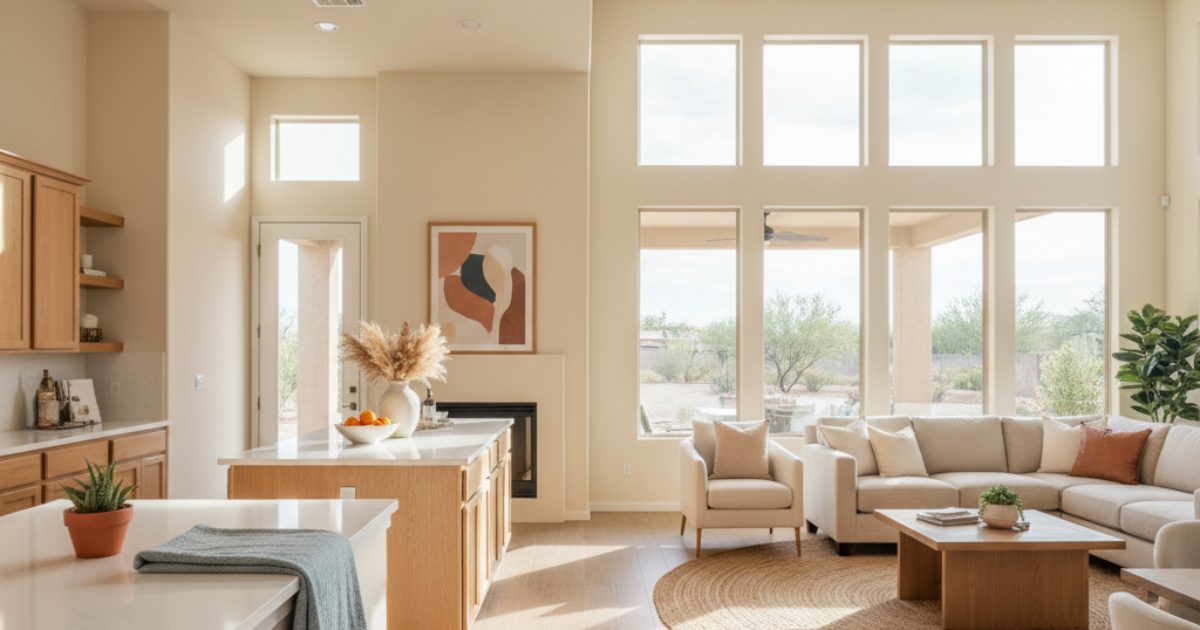
According to a 2026 Arizona REALTORS® survey, buyers continue to prioritize updated kitchens, open floor plans, and move-in-ready homes. But I think the phrase “move-in ready” can be a little misleading. It doesn’t necessarily mean a home has to be completely remodeled or look brand new. In my experience, buyers are usually looking for a home that feels clean, functional, well maintained, and cared for.
When I show homes in the West Valley, buyers react emotionally before they react logically. They walk in with a checklist, but what they’re really registering is whether the space feels bright or dark, open or cramped, loved or neglected.
“Buyers aren’t really shopping for countertops or cabinet hardware. They’re shopping for a feeling.”
That distinction matters because it changes how you should think about pre-sale preparation. Buyers want a kitchen that feels well maintained. They don’t necessarily need a $60,000 remodel to get that feeling.
The Core Problem: Spending Doesn’t Equal Value Added
Here’s the assumption that gets sellers into trouble most often.
“There’s a big difference between updating your home and over-investing in your home.” Sellers sometimes assume that if they spend $100,000 getting their home ready to list, their home’s value automatically increases by $100,000. Real estate doesn’t work that way. Appraisers don’t give dollar-for-dollar credit for most improvements, and buyers don’t either.
An appraiser’s job is to determine market value based on comparable sales. If no comparable home in your neighborhood sold for $50,000 more because of a renovated primary bathroom, your renovated bathroom won’t push your appraisal up by $50,000. It’s that straightforward.
Home value appreciation comes from market conditions, location, lot characteristics, and the overall condition of the home. It’s influenced far less by high-end finishes than most sellers expect.
Where Sellers Overspend Before Listing
Full Kitchen Remodels
Buyers consistently say they want updated kitchens. But “updated” is doing a lot of work in that sentence. Fresh cabinet paint, new hardware, a replacement faucet, and a modern light fixture can shift a kitchen from dated to appealing for a fraction of what a full remodel costs.
A full kitchen gut-and-replace in Arizona can run $40,000 to $80,000 or more. High-ROI home improvements in Arizona tend to be minor kitchen refreshes, energy-efficient upgrades, and curb appeal enhancements, not comprehensive renovations. That doesn’t mean you shouldn’t update your kitchen. It just means you probably don’t need to spend $60,000 or $80,000 remodeling it if you think you are going to sell sooner rather than later.
Pools and Outdoor Living
Sixty-four percent of respondents in the Arizona REALTORS® survey said a pool, covered patio, or spa adds value. They’re right that buyers appreciate outdoor living in Arizona’s climate. But appreciation and willingness to pay a premium are different things.
Adding a pool before listing typically costs $50,000 to $80,000 in the Phoenix metro area. Sellers rarely recover that full cost at appraisal. If you already have a pool, take care of it. Buyers in Arizona absolutely appreciate a well-maintained pool. But if you’re thinking about installing one just because you’re planning to sell next year, that’s a very different conversation.
Solar: A Specific Trap Worth Understanding
Solar is probably one of the most misunderstood upgrades I talk about with sellers. The reality is more complicated. Owned solar systems typically add measurable value to Arizona homes, while leased solar panels are generally not viewed as an asset by appraisers and can become a liability during resale.
Sellers with large remaining loan balances on owned systems often discover that buyers won’t absorb that debt at face value. And sellers with leased systems frequently encounter buyers who don’t want to assume the lease at all.
My advice is pretty simple. Install solar because it makes sense for you while you’re living in the home—not because you’re expecting it to increase your home’s value dollar for dollar when you sell.
Do the math. How much will the system cost? How much will it save you each month? How many years will it take to recover that investment? If you’re planning to stay in your home long enough for the numbers to make sense, it may be a great decision. But if you’re planning to sell in the next few years, don’t assume you’ll recover that investment at closing.
What Actually Supports Home Value Appreciation Before You List
The good news is that the highest-impact pre-sale work is also the least expensive. Buyers respond to homes that feel cared for. Most of what creates that feeling costs hundreds of dollars, not tens of thousands.
Low-Cost, High-Impact Fixes
-
Interior and exterior paint touch-ups, especially around trim, baseboards, and garage doors
-
Cabinet hardware replacement and fixing sticky or misaligned hinges
-
Replacing burned-out bulbs and adding brighter fixtures to dark rooms
-
Removing solar screens so natural light comes through during showings
-
Deep cleaning grout lines, windows, door tracks, and appliances
-
Pressure washing driveways, walkways, and the exterior of the home
-
Re-caulking around sinks and tubs where old caulk has yellowed or cracked
-
Fresh mulch in planting beds and trimmed shrubs along the front of the home
-
Garage door – paint it, or replace if it is dinged, dented, or damaged.
None of these things are glamorous, and they’re probably not the projects homeowners get excited about. But together, they make a home feel clean, cared for, and well maintained—and that’s exactly the feeling most buyers are looking for.
“Focus less on making your home perfect and more on making it feel cared for. Because in my experience, that’s what matters to buyers.”
Mid-Range Updates Worth Considering Case by Case
Some updates fall between the low-cost fixes and the big-ticket traps. Whether they make sense depends on your specific home, your neighborhood’s comparable sales, and your timeline.
-
Replacing dated light fixtures throughout the home (often a strong return for the cost)
-
Refreshing cabinet faces without replacing boxes or countertops
-
Updating a primary bathroom vanity and mirror without gutting the room
-
Replacing carpet in high-traffic areas where wear is visible
Before spending thousands of dollars, talk with an agent who understands the West Valley communities and your specific neighborhood. The updates that make sense in Verrado may not be the same ones that make sense in Surprise, Goodyear, or another part of the West Valley. Every neighborhood attracts a different buyer and has different comparable sales.
How the Current Market Shapes Your Strategy
The 2026 Arizona REALTORS® housing market predictions reinforce what I’m seeing every day: buyers have more choices than they did just a few years ago.
They’re not just comparing your home to other resale homes. They’re also comparing it to brand-new homes offering interest rate buy-downs, closing cost assistance, warranties, and other builder incentives.
If you’re thinking about moving to Buckeye or another West Valley community, this is one of the biggest differences you’ll notice in today’s market. New construction has become a major competitor for resale sellers, especially in areas with active builder communities.
That means sellers have to be more strategic than they did a few years ago.
If you’re thinking about spending money before you sell, make sure it has a purpose. Sometimes spending a few thousand dollars on paint, lighting, landscaping, and small repairs will have a much bigger impact than spending tens of thousands on a major remodel.
The goal isn’t to have the most updated house on the block.
The goal is to present a home that buyers feel offers the best value.
A Note for Buyers: Don’t Let Cosmetics Obscure a Good Home
Everything above is aimed at sellers, but buyers benefit from understanding the same logic. A home with dated cabinet hardware and older paint isn’t necessarily a bad home. It may be a well-maintained home that hasn’t been cosmetically updated.
When you’re evaluating a property, focus on the things that can’t be changed after closing.
-
Location and lot characteristics
-
Floor plan and room layout
-
Neighborhood and nearby infrastructure
-
Condition of major systems: roof, HVAC, water heater, plumbing
Paint color and cabinet hardware are not on that list. A home with great bones and cosmetic quirks can be a strong purchase. A beautifully staged home with structural or mechanical issues is a different story.
Putting It Together: A Practical Framework for Sellers
Before spending a dollar on pre-sale improvements, work through this sequence.
-
Get a current market analysis from a local agent who knows your specific neighborhood. Understand what comparable homes are selling for and in what condition.
-
Walk your home with fresh eyes and identify what feels neglected, not what feels dated. Those are different problems with different solutions.
-
Complete the low-cost fixes first. Clean, paint, repair, and brighten before considering anything larger.
-
Evaluate any mid-range update against comparable sales. If no comparable home in your area sold for more because of that update, it probably won’t move your price.
-
Avoid big-ticket additions like pools, full kitchen remodels, or new solar installations if your primary motivation is recouping the cost at closing.
The goal isn’t to have the nicest house on the block (I mean that would be great…). It’s to make smart decisions that help your home compete in today’s market.
Conclusion
One of my favorite parts of helping sellers is walking through their home and helping them identify the small improvements that will make the biggest impact with buyers. It’s amazing how often a few simple, inexpensive fixes can make a home feel completely different.
Sometimes that means recommending a fresh coat of paint. Maybe it’s a deep clean, professionally cleaning windows, or a few handyman fixes.
Sometimes it means telling someone not to spend money at all.
Every home is different, which is why I never believe there’s a one-size-fits-all answer.
If you’re thinking about selling, I’d encourage you to start with a conversation before you start writing checks. You may discover your home needs a lot less than you think.
Learn more about my home selling process here.
And if you’d like to hear me talk through these concepts in more detail, you can also watch my YouTube video on overinvesting before you sell.
Frequently Asked Questions
What do buyers actually look for in a home right now?
Buyers are primarily looking for homes that feel clean, functional, well-maintained, and cared for, rather than necessarily brand new or fully remodeled. They often react emotionally to the overall feeling of a space, prioritizing a bright, open, and loved atmosphere over specific cosmetic features like countertops.
Does spending money on home upgrades always increase its value?
No, spending money on home upgrades does not automatically guarantee an equal increase in home value. Appraisers and buyers assess value based on comparable sales and market conditions, not dollar-for-dollar credit for improvements. Home value appreciation is more influenced by location, market conditions, and overall condition than by high-end finishes.
Where do sellers most often overspend before listing their home?
Sellers often overspend on full kitchen remodels and adding new pools before listing. While buyers appreciate updated kitchens and outdoor living spaces, the cost of a complete renovation or pool installation frequently exceeds the recovered value at appraisal. Minor kitchen refreshes and maintaining existing features are typically more cost-effective.
What are the most impactful, low-cost improvements sellers can make?
The most impactful pre-sale improvements are typically low-cost and focus on making the home feel cared for. This includes tasks like interior and exterior paint touch-ups, deep cleaning, replacing light fixtures, updating cabinet hardware, and enhancing curb appeal with fresh mulch and trimmed shrubs.
How does the current market affect pre-sale renovation decisions?
In the current market, with more buyer choices and new construction offering incentives, sellers need to be more strategic. Spending a few thousand dollars on cosmetic updates and repairs can often have a greater impact on a home's competitiveness and perceived value than investing tens of thousands in major renovations.