Table of Contents
- What Is the Marketside District at Verrado?
- Why Retailers Are Choosing Buckeye Now
- What “Retail Entertainment” Actually Means for Residents
- What This Says About Buckeye’s Growth
- What Is Confirmed and What Is Still Unknown
- How Verrado Has Evolved to This Point
- What to Watch For Going Forward
- A Note for People Considering a Move to Verrado or Buckeye
Buckeye, Arizona has been one of the fastest-growing cities in the United States for several years running. That kind of growth eventually reaches a tipping point, and something shifts. Retailers start paying attention. Developers start making calls. Projects get announced that would have seemed premature just a few years earlier. The Marketside District at Verrado is one of those projects, and it tells you something meaningful about where Buckeye is headed.
If you live in Verrado or are thinking about moving there, this development is worth understanding. Not because it’s exciting news, but because it reflects a real change in how the area is evolving and what daily life could look like in the coming years.
What Is the Marketside District at Verrado?
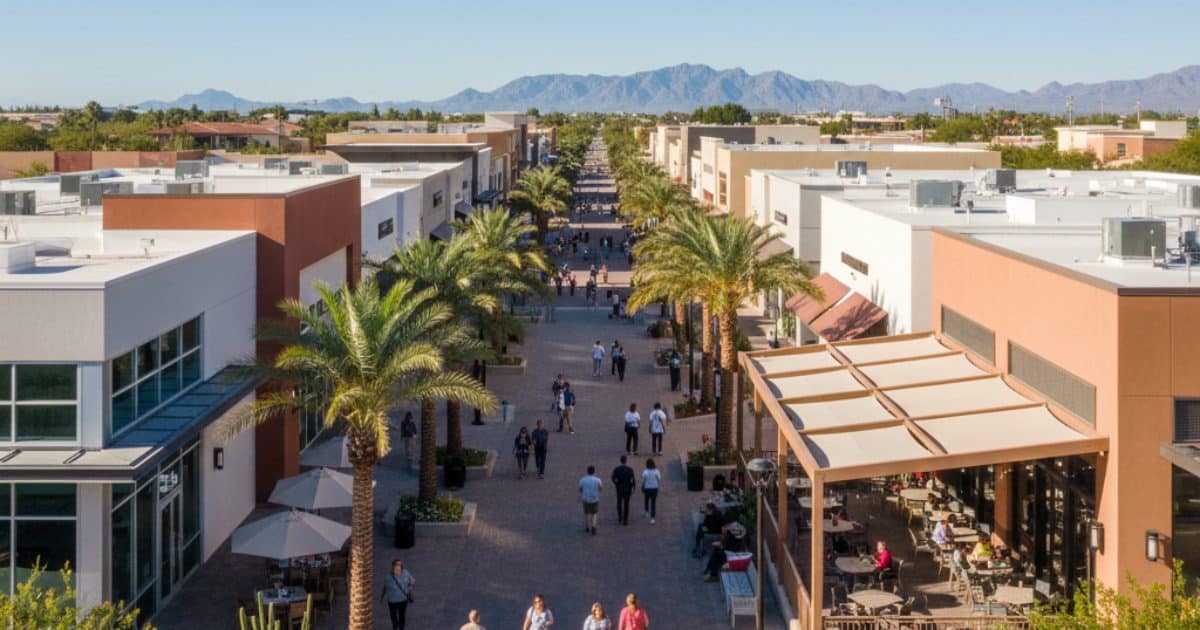
The Marketside District is the broader mixed-use development planned for Verrado. Within the district is Verrado Marketplace, the retail center that will bring many of the shopping, dining, entertainment, and everyday services residents have been anticipating. Together, these projects represent the next phase of commercial growth for the community.
Verrado itself has been evolving for years. Verrado has attracted national attention for its walkable Main Street, its community design, and its growth trajectory. The Marketside District represents the next chapter in that evolution, moving from a community with a charming local commercial core to one with a larger, more regionally significant retail presence.
Specific tenant announcements for Verrado Marketplace have been rolling out in phases. It’s worth checking the official Verrado Marketplace website for the latest updates as additional businesses are announced.
Why Retailers Are Choosing Buckeye Now
Retailers don’t open locations out of goodwill. They follow rooftops, incomes, and traffic counts. Buckeye’s population growth has finally crossed thresholds that make it viable for national brands to commit.
Consider the scale of what’s happened. Buckeye was a small agricultural town not long ago. It has since grown into one of the largest cities by land area in Arizona, with a population that has expanded dramatically over the past decade. That kind of growth creates the customer base retailers need to justify long-term leases.
The broader retail market also supports this timing. While some retailers have closed stores in recent years, many national brands continue expanding into fast-growing suburban communities where population growth is creating new demand. Buckeye fits that profile, making projects like Verrado Marketplace a logical next step as the area continues to mature.
There’s also been a shift in what retailers and developers are looking for. More emphasis is being placed on entertainment, dining, and experience-based businesses that give people a reason to stay longer and return more often. Verrado Marketplace fits squarely into that strategy.
What “Retail Entertainment” Actually Means for Residents
Beyond the Big Box Store
The phrase “retail entertainment” gets used loosely, so it’s worth being specific. This isn’t about adding a movie theater next to a grocery store. The concept refers to designing retail environments where the act of going out becomes the activity, not just the errand.
In practice, that can look like several things:
-
Restaurants with outdoor gathering spaces and live music
-
Fitness studios, climbing gyms, or activity-based concepts alongside traditional retail
-
Specialty food and beverage tenants like local breweries, coffee roasters, or chef-driven casual dining
-
Farmers markets, pop-up events, and community programming built into the site design
-
Health and wellness services integrated with retail (think medical offices, spas, and fitness concepts in the same walkable area)
This model also aligns with what many buyers are looking for in communities like Verrado—places that offer opportunities to gather, dine, and spend time close to home. Consumer research has shown a growing preference for spending on experiences rather than goods, and Spherical Insights projects the experience economy will continue growing at a compound annual growth rate of 17.5 percent from 2023 through 2032.
What This Could Mean Day to Day
For current Verrado residents, the most immediate change would be convenience. Right now, many everyday errands require driving east toward Goodyear or Surprise. As Verrado Marketplace continues to fill with retailers, restaurants, and services, many everyday errands could become even more convenient for residents.
It’s worth mentioning that Buckeye has already come a long way. When we first moved here, there were very few nearby shopping options beyond Main Street. Today, residents already have access to Costco, Fry’s Marketplace, Home Depot, Ace Hardware, Target, HomeGoods, Ulta Beauty, Ross, Marshalls, Goodwill, numerous medical and dental offices, and Sprouts and Paris Baguette is scheduled to open late July 2026. For those of us who have lived here for a while, the difference is remarkable. What once felt like a community on the edge of town now has many of the everyday conveniences people expect close to home. Verrado Marketplace isn’t creating retail from scratch—it’s building on the momentum that’s already transformed the area over the past decade.
Beyond convenience, a walkable retail district changes the texture of a community. It creates places where people run into neighbors, where families spend a Saturday morning, and where local identity gets built over time. Verrado’s Main Street has done that on a smaller scale for years. The Marketside District is designed to do it at a larger one.
What This Says About Buckeye’s Growth
Retail investment is often a lagging indicator. It follows population growth rather than leading it. The fact that a project like Marketside District at Verrado is moving forward signals that Buckeye has passed a critical mass threshold in the eyes of developers and national retailers.
That matters for a few reasons beyond just having more places to eat dinner.
Property Values and Community Appeal
Proximity to quality retail and dining is consistently cited as a factor in residential property values. This doesn’t mean every home near the Marketside District will automatically appreciate faster than comparable homes elsewhere. Markets are more complicated than that. But it does mean the community becomes more competitive when buyers are comparing options across the West Valley.
If you’re evaluating communities right now, the West Valley has a range of master-planned options, each at a different stage of development. Verrado is one of the more established, and the Marketside District reflects that maturity.
Employment and Local Economy
Retail development creates jobs, which is worth acknowledging even if retail employment isn’t the highest-wage category. Restaurants, fitness studios, medical offices, and specialty retail employ local residents. Some of those positions are part-time or entry-level, but others, particularly in healthcare and food and beverage management, are meaningful career-level roles.
More significantly, a strong retail corridor can attract secondary investment. When a district gains momentum, adjacent land becomes more attractive to office users, medical groups, and other employers. That kind of layering takes years, but it starts with projects like this one.
What Is Confirmed and What Is Still Unknown
This is an important distinction, and it’s one that often gets blurred in early coverage of development projects.
What appears confirmed:
-
Within the Marketside District, Verrado Marketplace is the commercial retail center where many announced retailers and restaurants will be located. The project is designed to serve both Verrado residents and the broader Buckeye market
-
The development reflects a deliberate strategy to bring larger-scale retail to the western Phoenix metro
What is still developing or unconfirmed:
-
Additional retailers, restaurants, and entertainment tenants that will join the businesses already announced for Verrado Marketplace.
-
Phasing timelines for construction and opening dates
-
The exact mix of entertainment, dining, and service retail that will ultimately open
-
How quickly secondary development will follow
Anyone making a housing decision based on anticipated amenities should treat unconfirmed details carefully. Plans change, tenants fall through, and timelines slip. That’s true of every development project, not just this one.
How Verrado Has Evolved to This Point
It helps to understand where Verrado started to appreciate why the Marketside District at Verrado feels like a natural progression rather than an out-of-nowhere announcement.
Verrado was designed from the beginning as a community built around walkability and a traditional neighborhood structure. Main Street Verrado was part of that original vision. Over time, the community has grown to include thousands of homes, multiple school campuses, extensive trail systems, and a golf course. The Victory at Verrado section added a 55-plus active adult component.
Having lived in Verrado for more than 12 years, I’ve had the opportunity to watch this community evolve firsthand. When my husband and I moved here, Main Street was really the primary place to shop and dine. Over the years, we’ve watched Buckeye continue to grow, with new retail, restaurants, medical offices, and everyday conveniences opening to serve the community. That’s one of the reasons the Marketside District feels like a natural next step rather than an unexpected announcement.
If you’re comparing the two sides of the community, a closer look at Verrado versus Victory can help clarify which fits your situation better. Both communities stand to benefit from expanded retail nearby, though the draw will be slightly different depending on lifestyle and stage of life.
The point is that Verrado has been building toward this kind of commercial development for years. The Marketside District isn’t a surprise; it’s the result of sustained population growth finally reaching a scale that supports it.
What to Watch For Going Forward
If you’re a current resident or a prospective buyer keeping an eye on Buckeye, here are the things worth tracking as the Marketside District moves through development:
-
Additional businesses announced for Verrado Marketplace, as more retailers and restaurants are confirmed beyond those already announced.
-
Construction progress and phasing updates, including when different portions of the development are expected to open.
-
Opening timelines for confirmed businesses, such as Safeway, Harkins Theatres, Target, and other announced retailers.
-
Road and infrastructure improvements that will support increased traffic in and around the Marketside District.
-
Future phases and nearby development, including what may be built on surrounding parcels as the area continues to grow.
The arrival of planned retail at the scale of the Marketside District signals that Buckeye is entering a new stage of growth. As more national retailers invest in the area, residents can expect continued changes that will shape daily convenience, the local economy, and the community’s long-term character.
A Note for People Considering a Move to Verrado or Buckeye
If you’re relocating to Arizona and evaluating the West Valley, planned retail development is one piece of a larger picture. Schools, commute times, HOA structure, home prices, and neighborhood character all matter too. The Marketside District at Verrado is a positive signal, but it shouldn’t be the only factor driving a decision.
What it does tell you is that Buckeye is attracting serious investment. Retailers and developers don’t commit capital to markets they don’t believe in. The fact that a project of this scale is moving forward in the western Phoenix metro says something about where institutional money thinks this area is going.
That’s useful context. It doesn’t replace doing your homework on the specific neighborhood, the school district, and the home itself, but it adds a layer of confidence that the surrounding community is on a trajectory worth paying attention to.
As more details about the Marketside District and Verrado Marketplace become public, I’ll continue to share updates here. If you have questions about living in Verrado, what to expect in Buckeye, or how to think through a move to the West Valley, feel free to reach out directly. This is the kind of local knowledge that’s hard to find in a press release, and I’m happy to talk through what it actually means for your situation.
Frequently Asked Questions
What is the Marketside District at Verrado?
The Marketside District is a large mixed-use development planned for Verrado, which includes Verrado Marketplace, a retail center. This project represents the next phase of commercial growth for the community, moving beyond its local commercial core to a more significant retail presence.
Why are retailers choosing Buckeye now for developments like Marketside District?
Retailers are choosing Buckeye because its significant population growth has created the customer base they need. National brands follow rooftops, incomes, and traffic counts, and Buckeye has now reached thresholds that make it a viable market for long-term retail investment.
What does ‘retail entertainment’ mean for residents of Verrado?
Retail entertainment means creating shopping environments where going out is an activity itself, not just an errand. This can include restaurants with outdoor spaces, activity-based businesses like gyms, specialty food shops, and community events integrated into the site design.
How will the Marketside District impact property values in Buckeye?
Proximity to quality retail and dining, like that planned for the Marketside District, is a factor in residential property values. While markets are complex, this development makes Verrado a more competitive community for potential buyers comparing options across the West Valley.
What details about the Marketside District are still unconfirmed?
Details still developing include the exact mix of future tenants, specific construction and opening timelines, and how quickly secondary development will follow the initial retail center. It's important for potential residents to treat these unconfirmed details with caution as plans can change.